

E-Waste Hub
Collecting and channeling e-waste responsibly

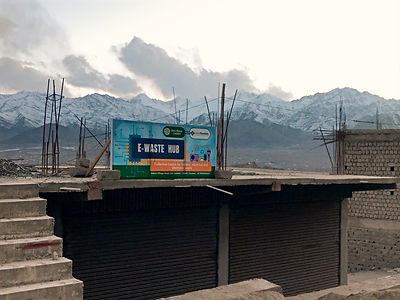

1
MoU
15+
Institutional partners
4+
Outreach sessions held
Background
E-waste is one of the fastest-growing waste streams globally, comprising discarded electrical and electronic devices such as small gadgets, household appliances, batteries, and solar panels. These items contain hazardous elements like lead, mercury, and cadmium, which can leach into soil and water if improperly disposed of, and exposure to which can cause neurological and other disorders. At the same time, they also contain traces of valuable elements like gold, silver, and platinum that can be recovered and reused, reducing the dependence on mining for virgin resources.
In Ladakh, there is no formal system for managing e-waste. E-waste is often mixed with general waste and disposed of. It is also given to waste aggregators, who use unsafe practices to extract elements.
Objective
The E-Waste Circularity programme aims to manage e-waste in an environmentally sound manner. The programme entails building awareness around e-waste, putting in place mechanisms for the collection and safe storage of e-waste, and ensuring that e-waste is channelised to authorised recyclers. At the heart of our approach is redcuing waste and facilitating resource recovery.
Impact
Our programme has received fantastic response as it addresses the neglected issues of menstrual hygiene and menstrual waste. In 2023, awareness camps were held in 50 villages and attended by 1300 women. During the awareness camps, we sold 1200 menstrual cups at 1.2 USD each, which helped us cover the cost of running the camps.
Activities
We work to create a formal e-waste management system in the region through:
-
Organising awareness campaigns to educate communities about e-waste and its impacts
-
Providing free pick-up services for households, institutions, and businesses
-
Collecting a wide range of e-waste, including small electronics, household appliances, batteries, and solar equipment
-
Segregating and safely storing collected waste
-
Channelising e-waste to authorised recyclers outside Ladakh for proper processing
The Way Forward
We plan to conduct awareness camps in all 142 villages as well as cover the schools and colleges in the region. We envision a Ladakh where menstrual waste management is no longer an issue.
Resources
-
E-waste Management Rules, 2022, https://cpcb.nic.in/uploads/Projects/E-Waste/e-waste_rules_2022.pdf
-
Battery Waste ManagementRules, 2022, https://cpcb.nic.in/uploads/hwmd/Battery-WasteManagementRules-2022.pdf